
What Embralith actually runs, and how the AI stays in its lane.
This page goes deeper than the Home overview. The SaaS platform holds the operational record, orders, inventory, schedules, documents, and approvals. The AI platform works on top of that record, drafting and checking work, and always leaving a named person to decide.
The operations queue: one record for the work itself.
The SaaS platform holds the operational record: orders, inventory, schedules, documents, and approvals.
OPERATIONS QUEUE
9 in 10 exceptions flagged before release: checks surface mismatches while work is prepared, so most exceptions are fixed before a shipment, schedule, or referral is released.
The figures above are illustrative sample figures for this concept demo, not measured client results.
Record, Referral RF-1024 · Health care operations
Referral received 12 May · Authorization: approved · Appointment: booked 19 May, 10:30
Documents attached: referral letter, authorization form, insurance card
Owner: Care coordination team · Status: Ready for appointment
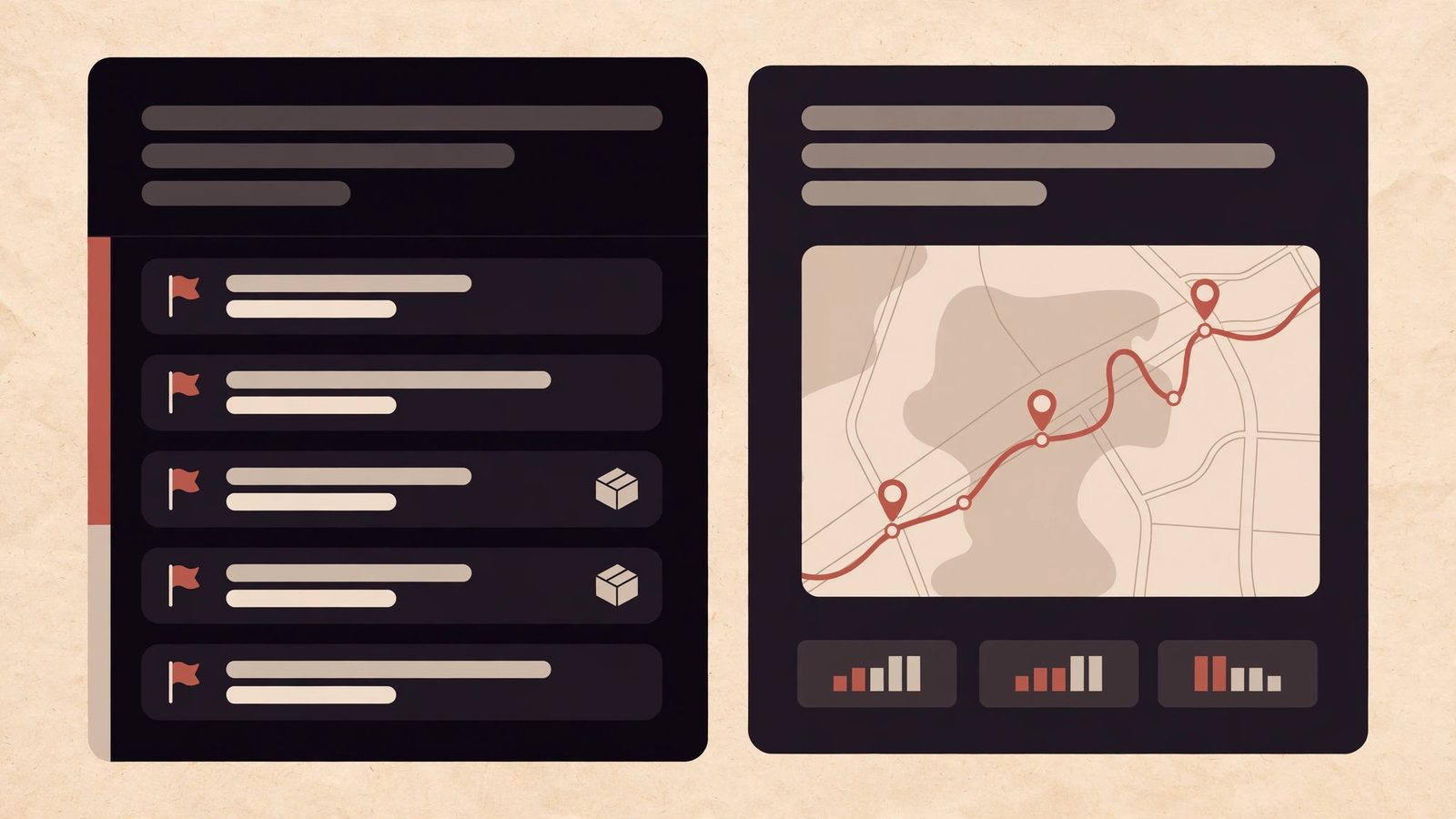
Concept screenshot of the fictional Embralith logistics exceptions list with route map. Not a live system.
The product visuals on this page are concept visuals of a fictional product, not a live system.
AI drafting: assistance with a paper trail.
The AI platform works on top of that record, drafting and checking work, and always leaving a named person to decide.
AI DRAFTING
The AI drafts a purchase order, a schedule change, or a document summary from the record itself, and shows the source documents, the limits it worked within, and the check it ran. A planner or coordinator reads the draft with its evidence attached, instead of taking a generated answer on trust.
Before a plan, order, or shipment is released, Embralith checks the details that usually cause exceptions, a weight against the label, a delivery window against the shipment date, a diagnosis code against the referral. Only the mismatches reach a person, and the fix is shown in the same screen, so routine work is not held up by a queue of problems that were never problems.
The AI never approves on its own. Every draft, check, and suggestion is routed to the person whose role covers it, and that person's decision, with the evidence and the reason, becomes part of the record. If the approver changes the draft, the change is kept too, so the next person who opens the record sees what was suggested, what was decided, and who decided it.
38% shorter approval cycles: routine purchase orders and schedule changes move through one named approval instead of a queue
The figures above are illustrative sample figures for this concept demo, not measured client results.
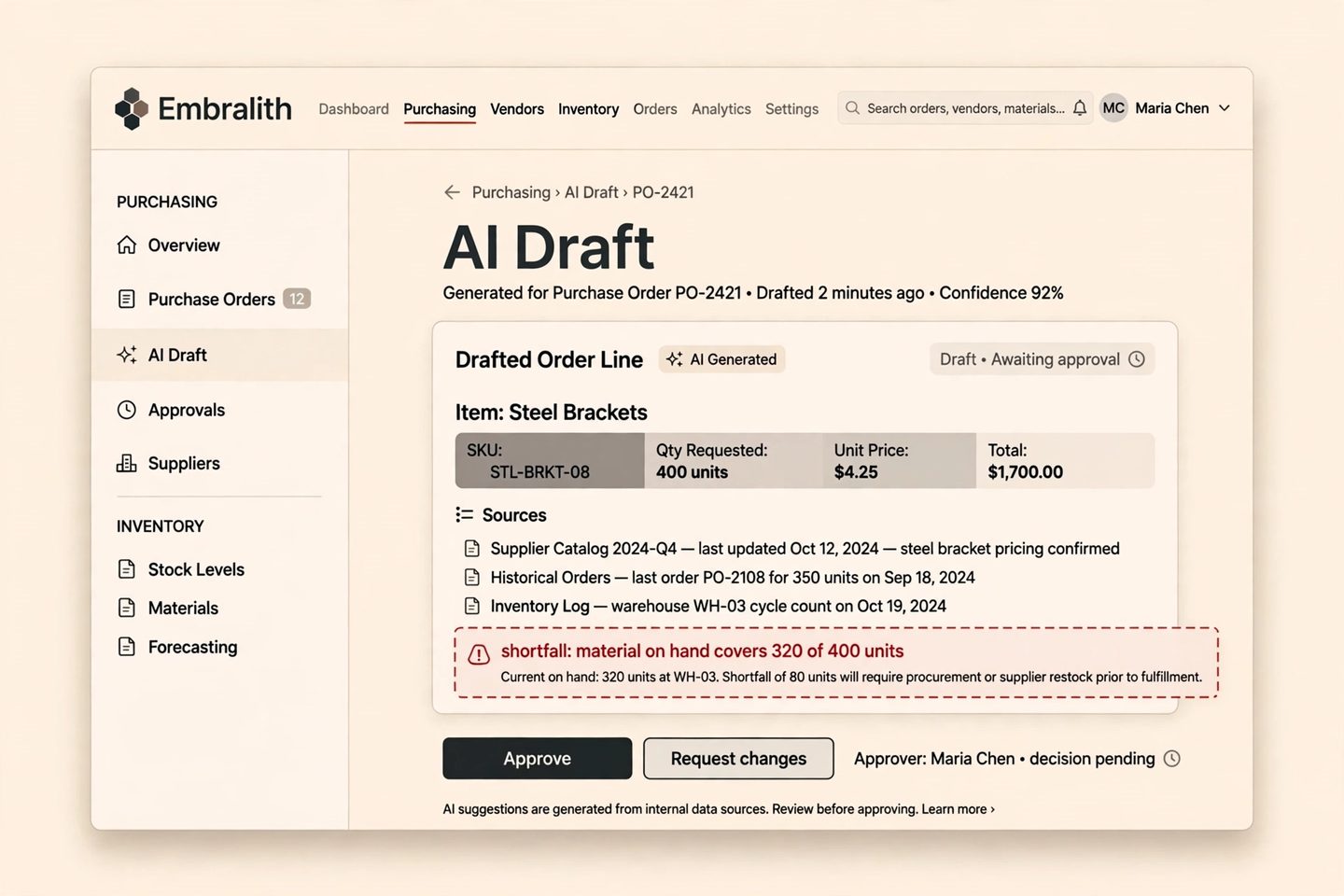
Concept screenshot of the fictional Embralith AI draft review. Not a live system.
The product visuals on this page are concept visuals of a fictional product, not a live system.
Approvals and governance: decisions stay with a named person.
Every draft, check, and suggestion is routed to the person whose role covers it, and that person's decision, with the evidence and the reason, becomes part of the record.
APPROVALS AND GOVERNANCE
The approver sees what changed, why, and what it costs, in the same screen where the decision is made. No chasing an email thread, no guessing who is responsible.
Routine approvals move in one step; the exceptions keep a clear record of who decided and why.
Referral RF-1024 shows the record, the reason, and the decision together: referral received 12 May, authorization approved, appointment booked 19 May at 10:30, with the referral letter, authorization form, and insurance card attached, and the care coordination team named as owner. Its status reads: Ready for appointment.
6 hours saved per week on reporting: reports draw from the same record teams already use, instead of reconciling spreadsheets at week end
The figures above are illustrative sample figures for this concept demo, not measured client results.
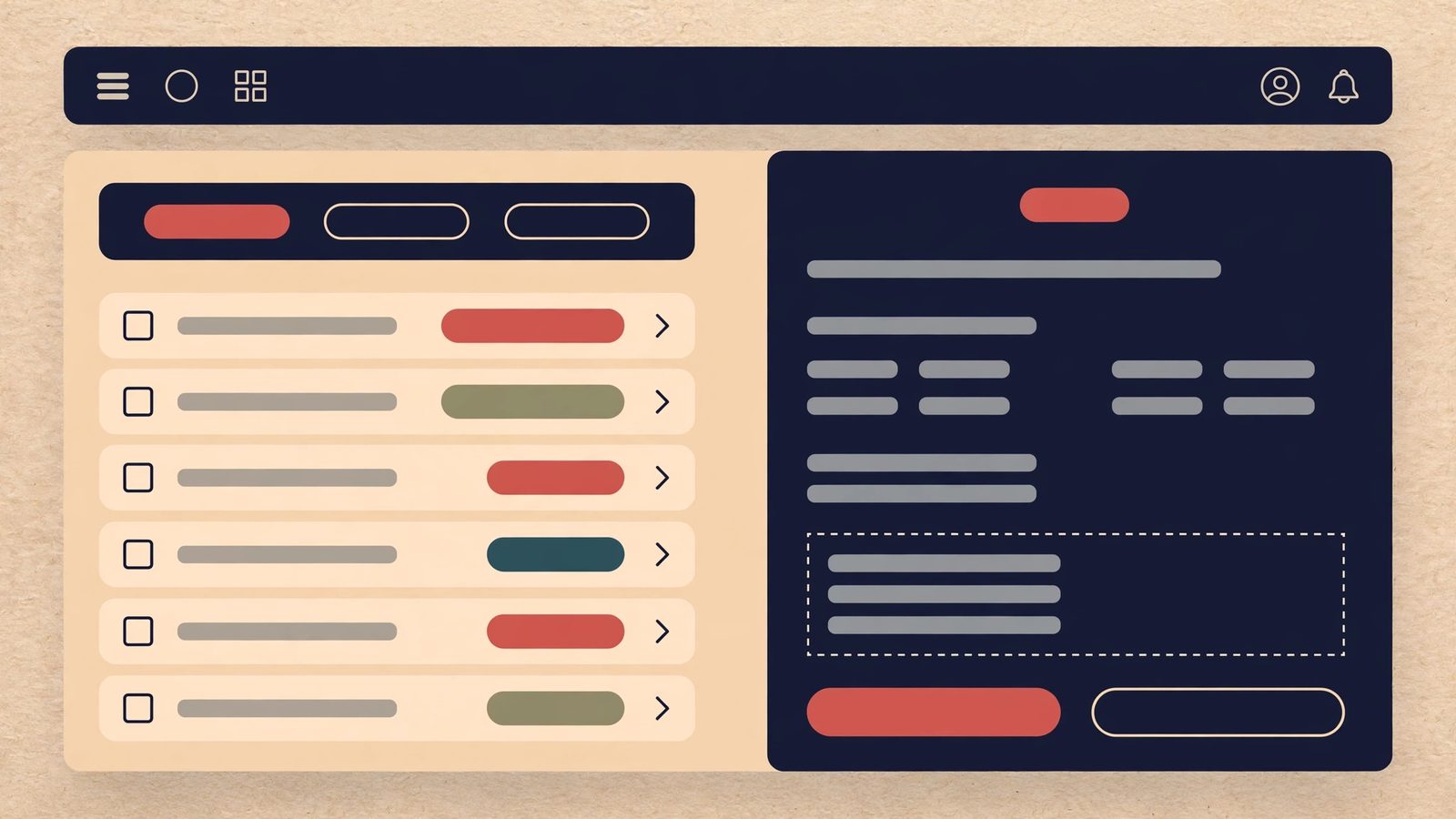
Concept screenshot of the fictional Embralith approvals queue. Not a live system.
The product visuals on this page are concept visuals of a fictional product, not a live system.
Where the same record does different work.
A demand forecast becomes a plant schedule only after it is checked against materials on hand, machine capacity, and the crews actually scheduled. Embralith drafts the floor plan with conflicts marked in plain language, so a planner can accept it, move a run to another line, or hold an order that would starve a higher-priority job, and purchasing, scheduling, and the shop floor all work from that same released plan.
As a shipment is prepared, Embralith checks the details that usually hold it up, a missing customs field, a weight that does not match the label, a delivery window that has closed. Only the shipments that need a person are flagged, with the fix shown in the same screen, so the fulfillment team starts with the orders that would otherwise miss their promise and the rest move through without extra handling.
In Embralith, the referral, the authorization, and the appointment live in one record. The AI platform reads the documents that arrive with the referral to pull out the dates, the diagnosis codes, and the missing forms, so staff see exactly what is still needed, who needs to provide it, and when the appointment can actually be booked, without retyping from a scanned page or chasing a shared inbox.
See the work the way your teams will.
The Insights posts show the same record at work: a forecast becoming a floor plan, a shipment clearing its checks, and a referral becoming an appointment. Read those examples, then come back to the detail above with a concrete job in mind.
Read the Insights posts